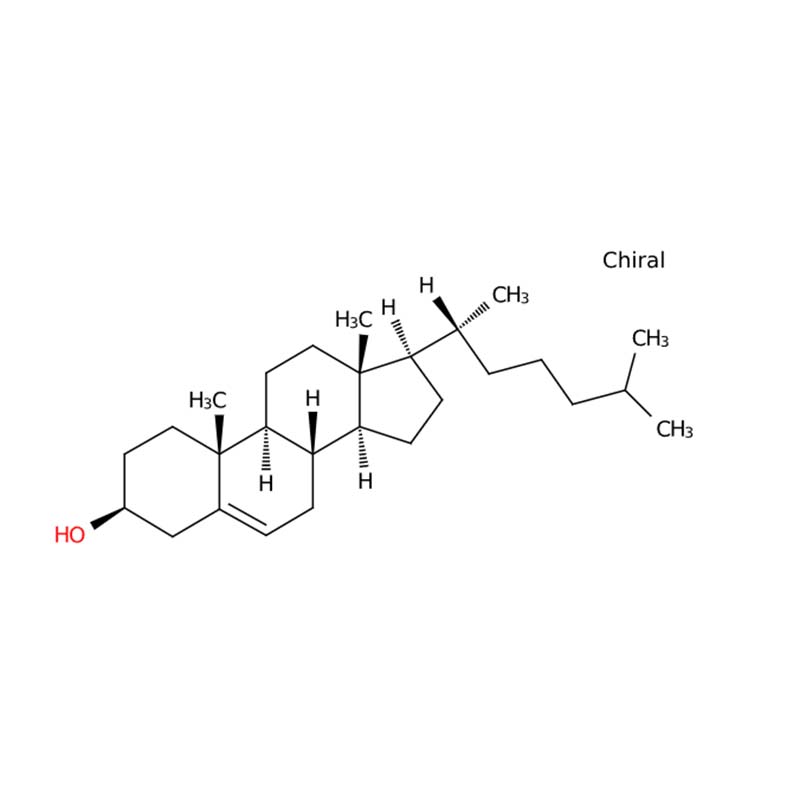
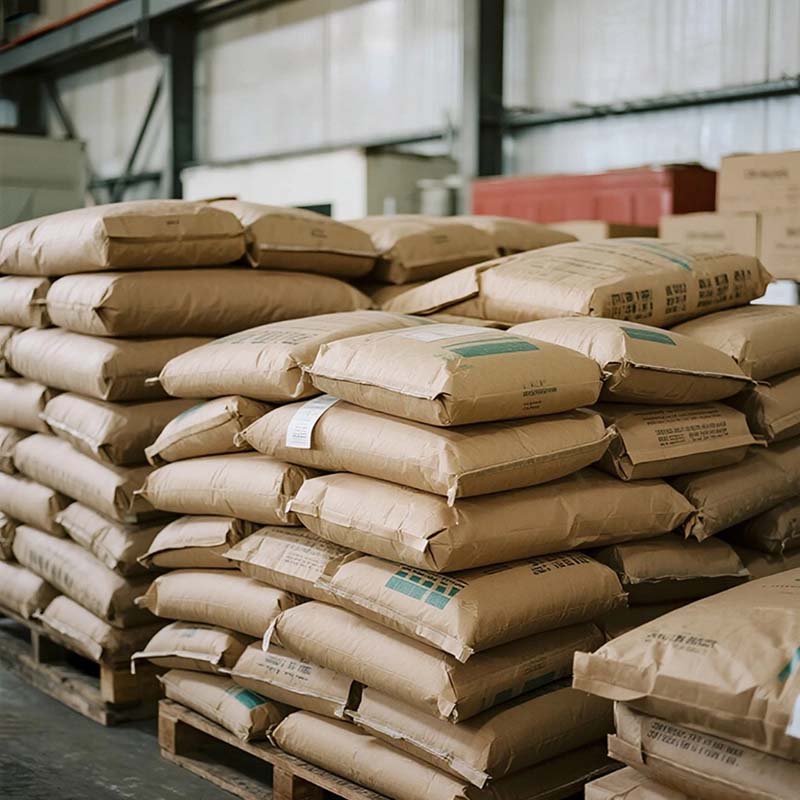
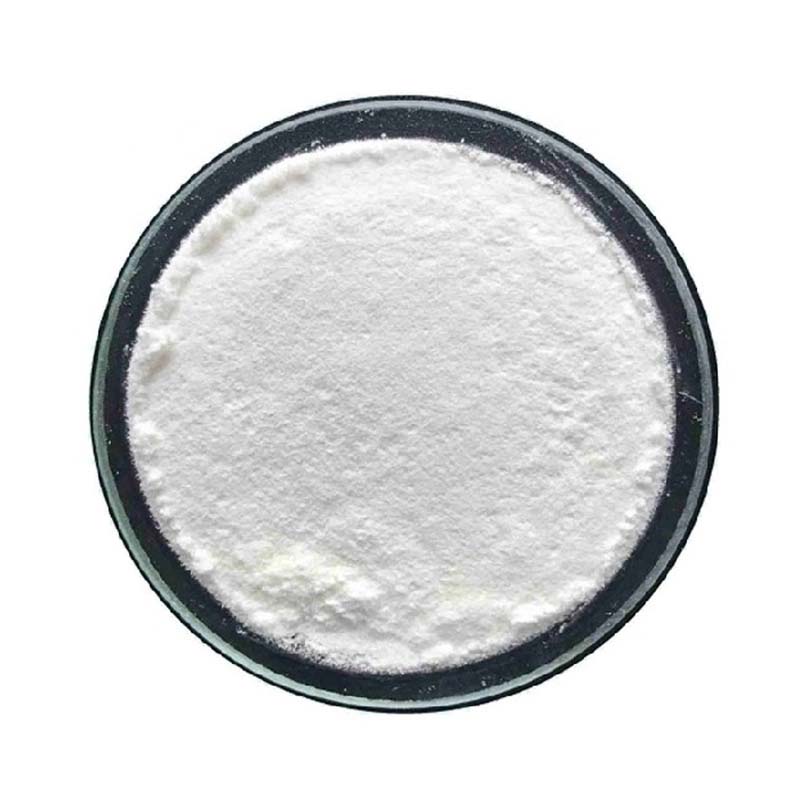
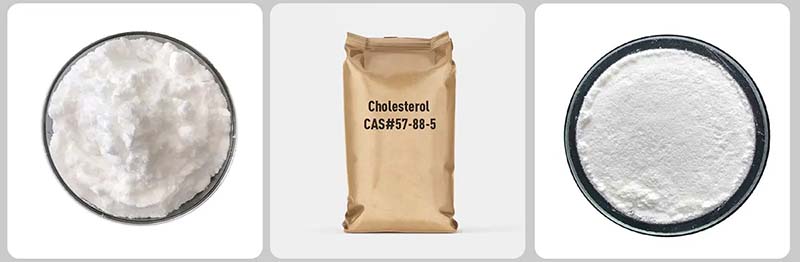
كولسترول رقم CAS: 57-88-5
أساسي لعملية التخليق الحيوي للهرمونات:يعمل الكوليسترول كمادة أولية في عملية التخليق الحيوي للهرمونات الستيرويدية، التي لا غنى عنها لتنظيم مجموعة من العمليات الفسيولوجية الحيوية الهامة في الجسم.
مادة أولية لتكوين فيتامين د: يعمل كمادة بيوكيميائية أساسية في عملية تخليق فيتامين د، وهو عنصر غذائي ضروري للحفاظ على سلامة العظام ودعم وظيفة الجهاز المناعي الطبيعية.
مادة أولية لتكوين حمض الصفراء: من خلال العمليات الأيضية، يتم تحويل الكوليسترول إلى أحماض مرارة. تلعب هذه الأحماض دورًا حيويًا في تسهيل عملية الاستحلاب وما يليها من امتصاص الدهون الغذائية في الأمعاء.
مكون الغشاء الخلوي المنتشر في كل مكان: باعتباره مكونًا موجودًا عالميًا في الأغشية الخلوية، يساهم الكوليسترول في الحفاظ على الاستقرار الهيكلي للأغشية وينظم سيولتها لضمان وظيفة الخلية السليمة.
1. نظرة عامة أساسية وأهمية فسيولوجية
الكوليسترول (رقم CAS 57-88-5) هو مركب ستيرويلي ذو ملمس شمعي، ويُعتبر مكونًا لا غنى عنه في الأغشية الخلوية في جميع أنواع الخلايا. يتم تصنيعه بشكل أساسي داخليًا في الكبد، بينما يمكن الحصول عليه أيضًا من خلال تناول الطعام. باعتباره جزيئًا دهنيًا أساسيًا، فإنه يعمل كمادة أولية حيوية لتخليق الهرمونات الستيرويدية وفيتامين د وأحماض المرارة، مما يدعم العديد من العمليات الفسيولوجية الأساسية في الكائنات الحية.
الأدوار الفسيولوجية الأساسية
• أساسي لعملية التخليق الحيوي للهرمونات: يعمل الكوليسترول كمادة أولية أساسية في عملية التخليق الحيوي للهرمونات الستيرويدية، التي تُعد ضرورية لتنظيم مجموعة من العمليات الفسيولوجية الحيوية في الجسم.
مادة أولية لتكوين فيتامين د: تُعد مادة بيوكيميائية أساسية في تكوين فيتامين د، وهو عنصر غذائي ضروري للحفاظ على سلامة العظام ودعم وظيفة الجهاز المناعي بشكل طبيعي.
مُسبِّب تكوّن حمض المرارة: من خلال العمليات الأيضية، يتم تحويل الكوليسترول إلى أحماض مرارية. تلعب هذه الأحماض دورًا حيويًا في تسهيل عملية الاستحلاب وما يليها من امتصاص الدهون الغذائية في الأمعاء.
مكون شائع في الأغشية الخلوية: باعتباره جزءًا موجودًا بشكل عالمي في الأغشية الخلوية، يساهم الكوليسترول في الحفاظ على الاستقرار الهيكلي للأغشية وينظم سيولتها لضمان وظيفة خلوية سليمة.
2. تطبيقات المنتج
يُستخدم الكوليسترول على نطاق واسع كمادة خام أساسية في سيناريوهات البحوث البيوكيميائية، بما في ذلك الدراسات المتعلقة بالدهون الفوسفورية في الدماغ، واختبارات تكتل الكوليسترول، وتخليق فيتامين د والهرمونات الستيرويدية. كما يعمل كعامل كيميائي حيوي وعامل استحلاب في مختلف العمليات الصناعية. بالإضافة إلى ذلك، له قيمة كبيرة في صناعة الأدوية—خاصة في إنتاج البيزور الاصطناعي والأدوية القائمة على الهرمونات—حيث يعمل كعامل استحلاب فعال في أنظمة الصياغة.
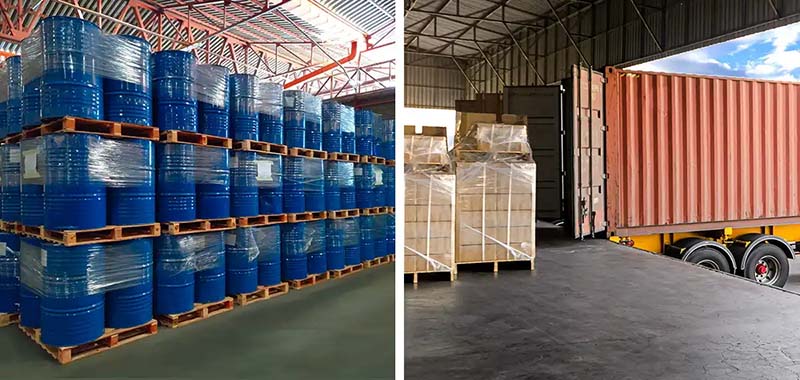
3. الخصائص الكيميائية الأساسية
المعلمة |
المواصفات |
نقطة الانصهار |
148-150 ° ج |
الدوران النوعي (ألفا) |
-36 درجة مئوية (c=2، ديوكسان) |
نقطة الغليان |
360 ° ج |
الكثافة |
1.06 |
معامل الانكسار |
1.5250 (تقدير) |
نقطة الوميض (Fp) |
250 ° ج |
درجة حرارة التخزين |
-20 ° ج |
الذوبانية |
H2O: 0.002 ملغ/مل؛ قابلية ذوبان ضئيلة في الماء |
الشكل المادي |
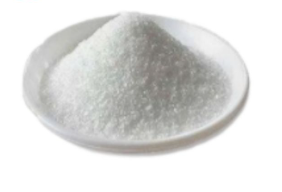
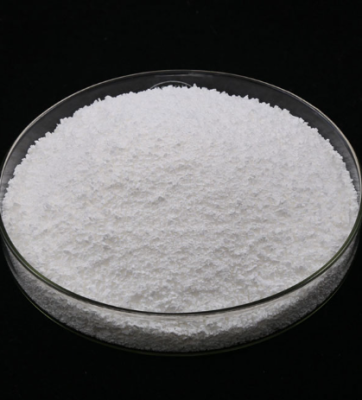
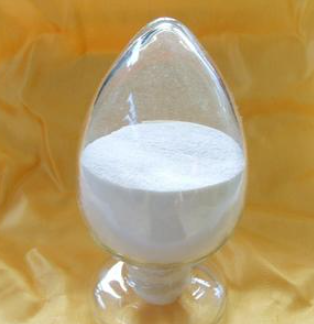
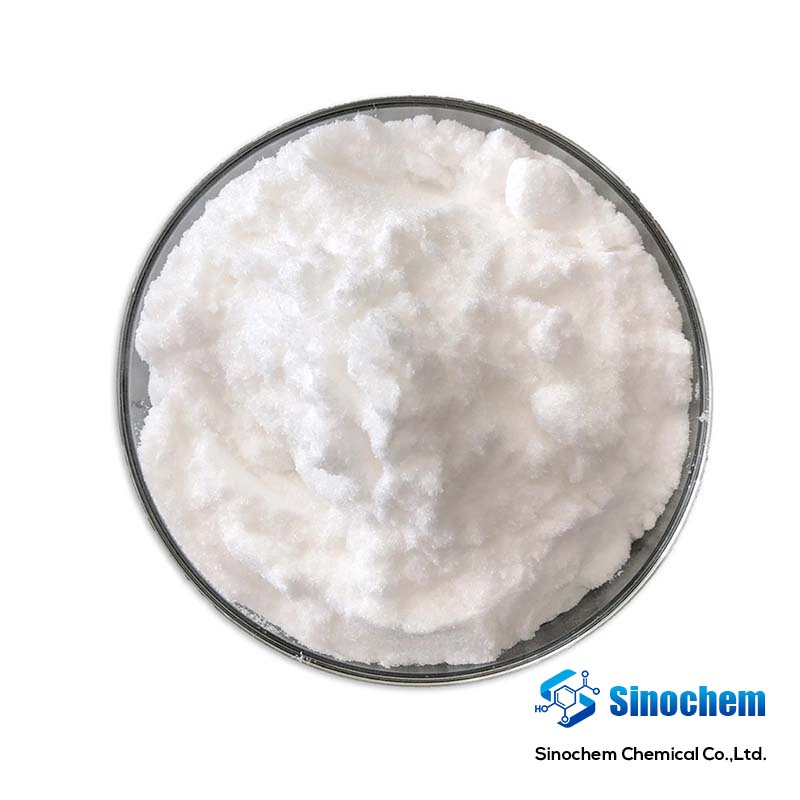
مسحوق أبيض |
قيمة الحموضة (pKa) |
15.03±0.70 (متوقع) |
الكثافة النوعية |
1.067 |
رائحة |
لا تكاد تصدر رائحة؛ تظهر على شكل حبيبات/بلورات لؤلؤية بيضاء أو صفراء باهتة. |
مصدر بيولوجي |
صناعي |
الدوران البصري |
-40.201 ° (C=0.01 جم/مل CHCL3) |
مؤشر ميرك |
14,2201 |
رقم BRN |
1915888 |
ثابت العزل الكهربائي |
2.9 (الإضاءة المحيطة) |
إن-تشي-كي |
إتش في واي دبليو إم أوم إل دي آي إم إف جي إيه-دي بي إيه كيو بي دي آي إف إس إيه-إن |
لوج بي |
9.619 (تقريباً) |
مرجع قاعدة بيانات CAS |
57-88-5 |
مرجع الكيمياء من NIST |
الكوليسترول (57-88-5) |
تصنيف الوكالة الدولية لأبحاث السرطان |
3 (المجلد). 31، سوب 7) 1987 |
سجل المواد في وكالة حماية البيئة |
الكوليسترول (57-88-5) |
4. معلومات السلامة والسمية
رموز المخاطر: Xn، Xi
• عبارات المخاطر: 10-48/20/22-40-38-22-36/37/38-67-36/38-20-63
• بيانات السلامة: 24/25-22-36/37-36-26
• ريدادار: UN 1170 3/PG 3
• WGK ألمانيا: 1
• رقم RTECS: FZ8400000
• مدرج في قائمة TSCA: نعم
رمز النظام المنسق: 2906 13 10
فئة الخطر: مهيج
بيانات المواد الخطرة: 57-88-5
ملاحظة حول السمية: يوجد الكوليسترول في جميع أنسجة الحيوانات، مع تركيزات أعلى في الحبل الشوكي، الدماغ، الإفرازات الجلدية، وحصوات المرارة. باعتباره كحولًا غير مشبع وغير قابل للتصبن، يتم تصنيعه في الجسم من وحدات الأسيتات ويتم تنظيمه بواسطة إنزيمات محددة. إنه المركب الأساسي للعديد من الستيرويدات، ويشكّل ارتفاع تركيزاته في الدم عوامل تساهم في حدوث أمراض القلب والأوعية الدموية.